
Menu
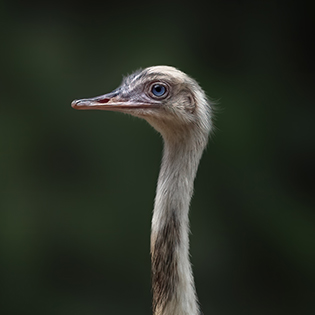
Rheas

origin
South East, South America (Also known as the Pampus Ostrich)
sex
Female (Hen) / Male (Rooster)
weight
40-70 kg
height
5-6 ft around 150 /180cm
Lifespan
20 years
animal population
There is no exact count of Rheas in the wild but there are 80 million flightless birds (Ratites) of which Rheas are one breed.Did you know?
- Rheas are very inquisitive birds and visitors to the farm can have lots of fun feeding them! However, our Rheas have an orange circle next to them, which means care must be taken when feeding them as they do like to have a nibble!
- The Rhea belongs to the same family as the Ostrich, Emu and Kiwi and are all flightless birds or ratites.
- Rhea’s have dark grey and brown feathers and 2 long powerful legs, with 3 toes on each. Their legs enable them to run very fast, up to speeds of 60mph, with the help of their feathers acting like sails on a boat.
- They live on grasslands, whereby they can hide in tall plants.
- The Female Rhea can lay up to 30 eggs and it is the Male's role to build a nest and look after the eggs until they hatch into chicks and will burrow inside the males feathers for safety.
- In the breeding season the Male will develop a black ring around the bottom of its long neck. He will mate with up to 12 different Females and is slightly larger and darker than the female.
- The Male Rhea can be very territorial, however also very clever. He protects the eggs by creating a decoy, placing some eggs outside of the nest, whilst the rest of the eggs are actually inside.
- Their diet consists of vegetation such as leaves, insects such as flies and even small mammals and lizards.
Where to next?
Tortoises
Goats
Highland Cows
Donkeys